Back to all posts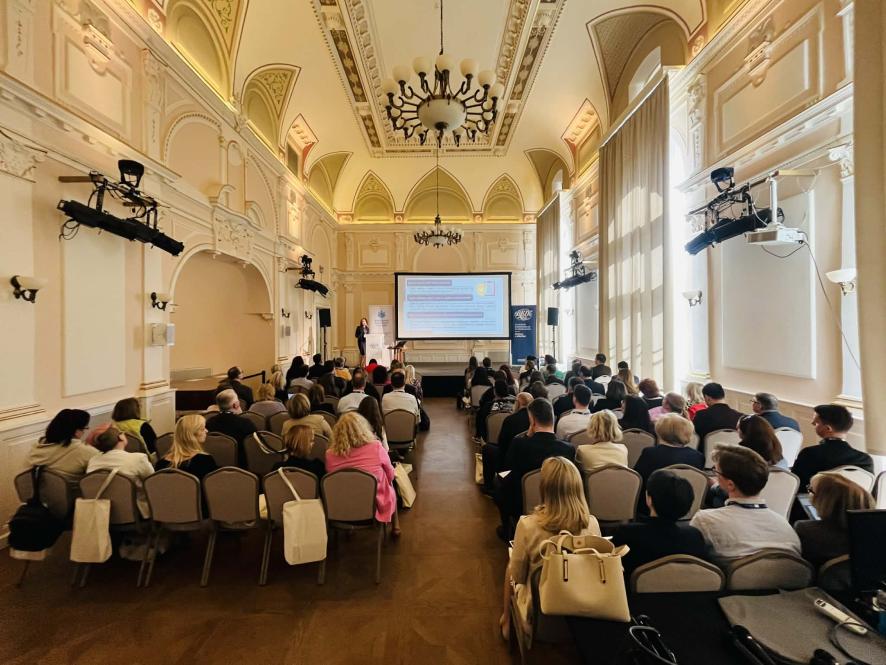
On 23 March 2026, the Budapest Chamber of Commerce and Industry and the Budapest Conciliation Board jointly organised a professional conference entitled “Consumer Protection Updates: Focus on the Regulatory Environment Affecting Micro, Small and Medium-Sized Enterprises” in the Ceremonial Hall of the Márai Sándor Cultural Centre, as the closing event of the FAIRCOMADR EU project. The occasion also provided an opportunity to summarise the results of the two-year programme.
Closing Professional Conference within the Framework of the FAIRCOMADR Project
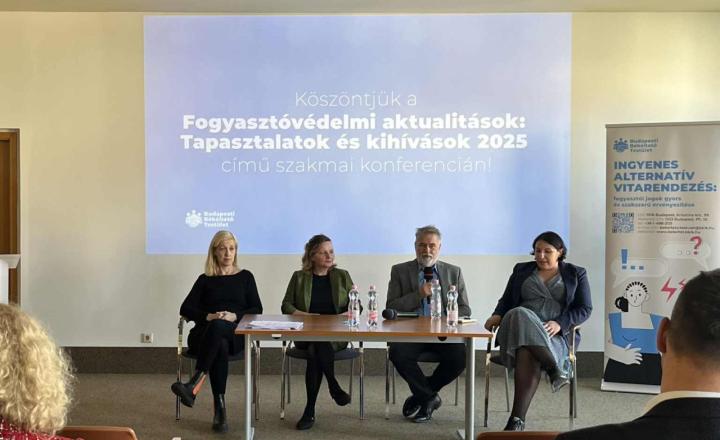
On 23 March 2026, the Budapest Chamber of Commerce and Industry (BCCI) and the Budapest Conciliation Board (BCB) jointly organised a professional conference entitled “Consumer Protection Updates: Focus on the Regulatory Environment Affecting Micro, Small and Medium-Sized Enterprises” in the Ceremonial Hall of the Márai Sándor Cultural Centre. The event, held between 10:00 a.m. and 3:00 p.m., was implemented with European Union funding as the closing event of the FAIRCOMADR project.
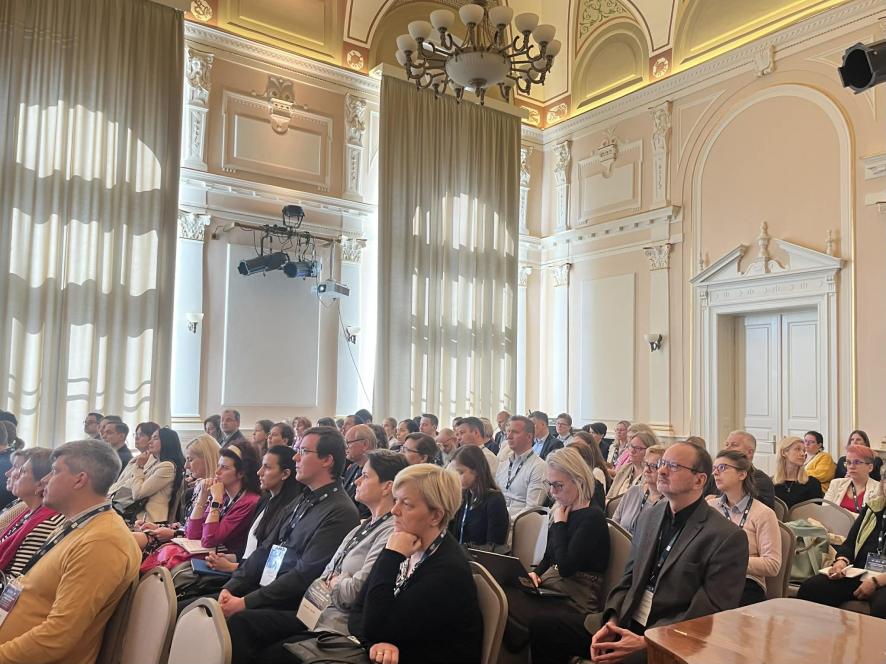
We welcomed nearly 100 guests to the conference. The event brought together a wide range of professionals from both the public and market sectors, including representatives of the Hungarian Chamber of Commerce and Industry, the regional conciliation boards, the National Authority for Trade and Consumer Protection, and the Hungarian National Trade Association.
The event was opened by Dr Viktória Bódi, Secretary General of the Budapest Chamber of Commerce and Industry, and Dr Éva Inzelt, President of the Budapest Conciliation Board. Through three presentations, the morning programme provided a comprehensive overview of current consumer protection issues affecting micro, small and medium-sized enterprises.
Dr Krisztina Gyuris Csákiné, Deputy State Secretary responsible for Consumer Protection and Trade at the Ministry for National Economy, delivered a presentation entitled “Businesses as Consumers.” This was followed by Dr Andrea Magdolna Nagy, attorney at the Dr Andrea Magdolna Nagy Law Office, who analysed the legal room for manoeuvre and adaptation options available to businesses in her presentation “The Room for Manoeuvre of SMEs – Within and Beyond Conciliation – in Light of the Latest Consumer Protection Regulation.” The morning session concluded with a presentation by Dr Attila Szabó, legal counsel at Media Markt Magyarország Kft., entitled “Challenges of the Quasi-Consumer Warranty Available to SMEs from the Retailer’s Perspective.” The presentations were followed by a question-and-answer session.
The afternoon session centred on an interactive roundtable discussion that explored the experience of challenging conciliation board decisions before the courts. Participants in the discussion were Dr Andrea Adamcsák, Vice President of the Budapest Conciliation Board; Dr Réka Gőbölös, President of the Baranya County Conciliation Board; Dr Péter Károly Horváth, President of the Csongrád-Csanád County Conciliation Board; and Dr Zsolt Hajnal, President of the Hajdú-Bihar County Conciliation Board. The discussion was moderated by Dr Éva Inzelt.
At the end of the conference, the President of the Budapest Conciliation Board presented a summary of the results of the FAIRCOMADR project. The event on 23 March provided a fitting framework for closing the professional phase of the programme: it created an opportunity to review the experience gained, jointly interpret current regulatory issues, and further strengthen cooperation among institutions active in the fields of consumer protection and conciliation.
The Objectives and Main Directions of the FAIRCOMADR Project
The FAIRCOMADR project — “Fostering the awareness of fair commercial practices through ADR tools within Hungary” — is an EU-funded initiative running from 15 April 2024 to 14 April 2026. The programme aims to increase awareness of conciliation, strengthen consumer redress, reduce the occurrence of unfair commercial practices, and encourage businesses to cooperate in alternative dispute resolution procedures.
The programme’s main target groups were consumers, businesses, the members and staff of the Budapest Conciliation Board, as well as the network of conciliation boards and professional partner organisations. The project was designed so that education, research, service development, professional cooperation and communication would reinforce one another and thereby improve the visibility and accessibility of conciliation.
Main Results of the FAIRCOMADR Project
Within WP2, five service design workshops were implemented, with a total of 62 participants. This work package involved a service design-based consumer research and development process with the participation of stakeholders — namely consumers, BCB staff and board members, regional conciliation boards, territorial chambers, and businesses. Its objective was to identify consumer pain points and make the services of the Budapest Conciliation Board more user-friendly.
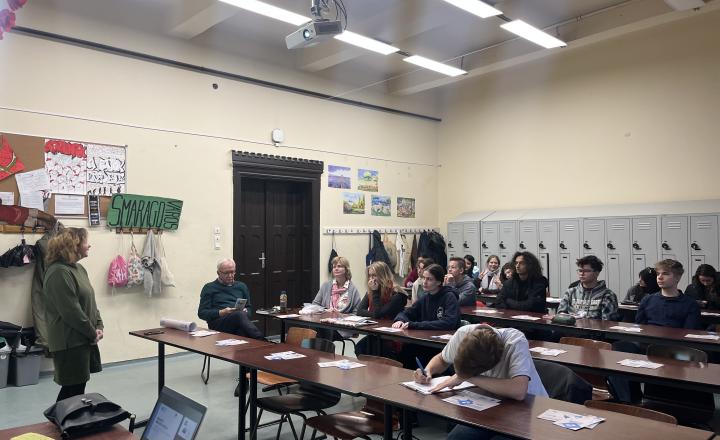
Within the WP3 public consumer education programmes, a total of 9 activities were implemented. Four presentations for secondary school students reached 189 students; four information sessions for the senior target group reached 151 pensioners; and outreach activities organised in three Auchan stores reached 113 participants from the working-age population. Altogether, the activities under this work package reached 453 participants (target: 300). These programmes were designed to strengthen conscious consumer behaviour, promote conciliation, and improve practical consumer protection awareness.
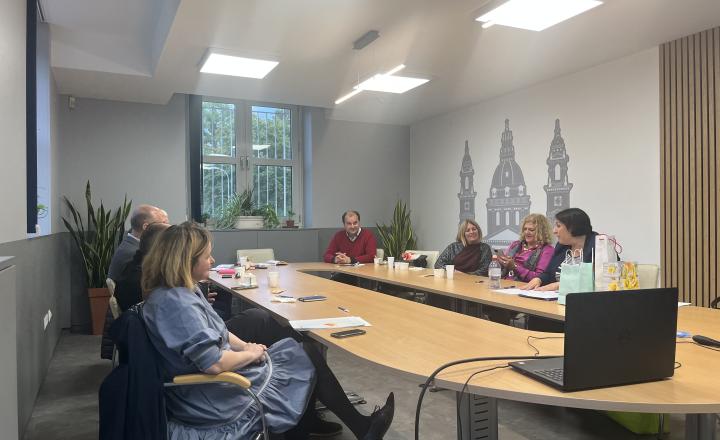
WP4 and WP5 focused on reaching business and professional target groups. In WP4, 4 business working group meetings were implemented, with 130 participants (target: 100). Within WP5, 4 professional conferences and internal training sessions took place, with a total of 157 participants (target: 140). These programmes helped deepen professional cooperation, support knowledge sharing, improve business preparedness, and strengthen a more consistent approach to legal application.
A key result of the WP6 communication and dissemination pillar was the creation and operation of the English-language website of the Budapest Conciliation Board. Online and offline visibility was built across multiple channels: the website, the blog, YouTube, Facebook and LinkedIn platforms, press coverage, Google campaigns, as well as online and printed information materials. The purpose of this communication work was to make information leading to conciliation easier to access and easier to understand, while also strengthening the long-term visibility and impact of the project.
In total, 22 programmes were implemented within the FAIRCOMADR project. Events and workshops reached a wide range of consumers, businesses and professional partners, and the total number of actual participants was 802, compared with an original target of 540. The programme contributed to increasing awareness of conciliation, deepening consumer and business awareness, strengthening professional cohesion, and supporting the service development of the Budapest Conciliation Board.
Summary
Both the closing event and the project’s overall professional trajectory demonstrated that conciliation can function truly effectively when institutional expertise, consumer information, business preparedness and professional cooperation continue to develop in a mutually reinforcing way.
The Budapest Conciliation Board would like to thank all speakers, participants and partners whose contribution helped ensure the successful implementation of the FAIRCOMADR project.
Downloadable PDF: A FAIRCOMADR projekt összegzése
This event was organised within the framework of the FAIRCOMADR project (Project No 101146134), funded by the European Union. The views and opinions expressed in this content are those of the author(s) only and do not necessarily reflect those of the European Union or EISMEA (an executive agency of the European Commission). Neither the European Union nor EISMEA can be held responsible for them.